Every accomplished speaker has one thing in common: they did not improve simply by delivering more presentations. Growth came from understanding what worked, what did not, and making deliberate adjustments after every speaking opportunity.
Many speakers assume confidence develops naturally with experience. While stage time certainly helps, repetition without reflection often reinforces existing habits. The fastest route to becoming a stronger communicator is creating a structured feedback loop that transforms every presentation into a learning opportunity. Whether you speak at conferences, corporate events, leadership meetings or industry gatherings, feedback is the fuel that drives meaningful improvement.
Why Most Speakers Plateau
Many speakers experience rapid progress early in their journey. They become more comfortable in front of audiences, learn how to manage nerves and develop a clearer presentation style. At some point, however, their progress slows.
This plateau occurs because familiarity can be mistaken for mastery. Once speakers become comfortable delivering a presentation, they often stop examining their performance critically. They may continue receiving positive audience reactions, but subtle weaknesses remain unaddressed. Without meaningful feedback, improvement becomes largely a matter of guesswork.
Another challenge is that speakers often rely on their own perception of how an event went. Unfortunately, self-assessment can be unreliable. What feels successful on stage may not have produced the intended impact, while moments that felt awkward may have resonated strongly with listeners. Feedback helps bridge this gap between perception and reality.
The most successful speakers understand that every presentation generates valuable information. Instead of viewing speaking engagements as isolated events, they treat each one as a source of insight that can strengthen future performances.
Understanding the Speaking Feedback Loop
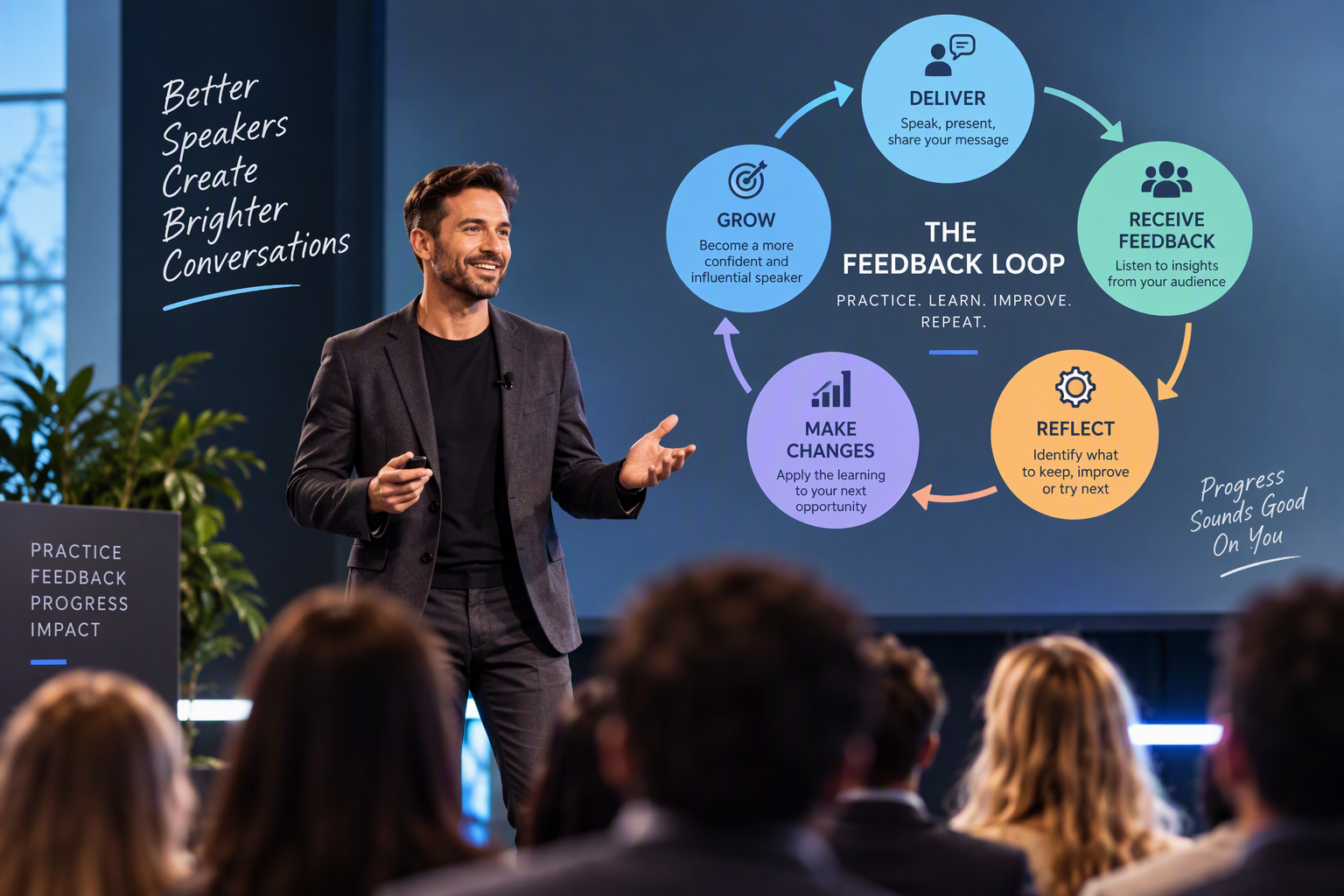
A feedback loop is a continuous cycle of delivery, evaluation, adjustment and improvement. Rather than waiting months to assess progress, speakers gather information after every opportunity and use it to refine their approach.
The process begins with delivering a presentation. Following the event, feedback is collected from audiences, organisers, colleagues or mentors. The speaker then analyses the information, identifies patterns and determines specific actions for improvement. These changes are tested during the next presentation, which creates another round of feedback and learning.
This cycle generates consistent, incremental progress. Instead of attempting dramatic transformations, speakers focus on small improvements that compound over time. A slight enhancement in storytelling, audience engagement or stage presence may appear insignificant on its own, but repeated adjustments can produce remarkable results over a year or more.
Elite athletes, musicians and business leaders use similar feedback systems. Speaking should be treated no differently. Continuous improvement rarely happens by chance. It is usually the result of a structured process of observation, learning and adaptation.
Collecting Feedback from the Right Sources
Not all feedback has equal value. While compliments can boost confidence, they do not necessarily reveal where improvement is needed. Effective speakers gather information from multiple perspectives to gain a balanced understanding of their performance.
Audience feedback often provides the most direct insights. Event surveys, audience questions and post-event conversations can reveal which messages resonated most strongly. If attendees consistently reference a particular story or concept, it is usually a sign that it made a meaningful impact.
Event organisers offer another valuable perspective. They observe audience engagement, understand event objectives and regularly work with different speakers. Their observations can highlight factors that may not be obvious from the stage. Organisers can often identify whether a speaker successfully aligned with the event’s goals and contributed to the overall experience.
Professional speaking coaches and trusted peers can provide more detailed assessments. They may notice issues related to pacing, body language, structure or delivery that audiences overlook. Because they have experience evaluating presentations, their feedback is often highly actionable.
Video recordings are equally important. Watching a presentation objectively can reveal habits that speakers never notice while performing. Filler words, repetitive gestures, rushed sections and missed opportunities often become clear when reviewing footage. For many speakers, video remains one of the most effective feedback tools available.
Turning Feedback into Action
Collecting feedback is only the first step. Growth occurs when feedback leads to meaningful changes. One of the biggest mistakes speakers make is gathering information and then failing to apply it.
The most effective approach is to identify recurring themes. If several audience members comment on presentation pace, storytelling or audience interaction, there is likely an opportunity to improve. Isolated comments may simply reflect personal preferences, but repeated observations often highlight genuine development areas.
Once a pattern has been identified, speakers should create specific actions rather than vague intentions. For example, “be more engaging” is difficult to measure. A more useful goal might be to ask three audience questions during the presentation or to include a relevant story within the opening five minutes.
It is equally important to focus on one or two improvements at a time. Attempting to overhaul every aspect of a presentation can feel overwhelming and may reduce overall effectiveness. Incremental improvements are easier to implement and typically produce better long-term results.
By testing adjustments in future presentations, speakers create measurable progress. Over time, this disciplined approach leads to stronger delivery, greater audience engagement and increased confidence.
Using Self-Reflection to Strengthen Performance
External feedback is valuable, but self-reflection remains an essential part of the feedback loop. The strongest speakers develop the habit of evaluating their own performances immediately after an event while memories remain fresh.
A simple review process can yield powerful insights. Consider questions such as:
- Which sections generated the strongest audience response?
- Where did energy levels rise or fall?
- Which stories or examples resonated most effectively?
- Did the presentation achieve its intended objective?
- What would I do differently next time?
Keeping a speaking journal can make this process even more valuable. Documenting observations after each presentation helps identify patterns over time. Certain challenges may repeatedly emerge, while strengths become increasingly apparent.
Reflection also encourages intentionality. Rather than moving automatically from one speaking engagement to the next, speakers develop a deeper understanding of how their choices influence audience outcomes. This awareness accelerates growth because lessons are captured and applied instead of forgotten.
The goal is not to criticise every aspect of a performance. Balanced reflection recognises successes as well as opportunities for improvement. Understanding what works is just as important as identifying what needs refinement.
The Power of Small, Consistent Improvements
Many speakers search for breakthrough moments that will dramatically transform their abilities. In reality, meaningful progress usually comes from small improvements repeated consistently.
Imagine improving eye contact slightly, strengthening one story, refining opening remarks and reducing filler words. Each adjustment may appear modest. Combined over dozens of presentations, however, these enhancements create a substantially stronger speaker.
This principle is particularly important for professional speakers and thought leaders. Audiences increasingly expect engaging, polished and valuable presentations. Small refinements help speakers stay relevant and continuously raise the quality of their delivery.
Consistent improvement also builds confidence. Instead of hoping for success, speakers develop evidence-based belief in their abilities because they can see tangible progress. Each presentation becomes proof that learning is taking place and performance is evolving.
Over time, these improvements become embedded habits. Techniques that once required conscious effort become natural behaviours, allowing speakers to focus more attention on connecting with their audience and delivering value.
Creating a Long-Term Habit of Growth
The most accomplished speakers rarely believe they have finished learning. Regardless of experience level, they continue seeking feedback, refining techniques and experimenting with new approaches.
Building a sustainable feedback loop does not require complex systems. It can be as simple as collecting audience comments, reviewing recordings, reflecting after each presentation and committing to one improvement before the next event. Consistency matters far more than complexity.
The habit becomes particularly valuable as speaking opportunities increase. Larger audiences, higher-profile events and more influential stages bring greater expectations. A structured feedback process ensures that growth continues alongside these opportunities.
Ultimately, speaking excellence is not determined by talent alone. It is shaped by a willingness to learn, adapt and improve continuously. Every audience, every presentation and every conversation contains information that can make the next performance stronger.
The speakers who improve fastest are not necessarily those with the most experience. They are the ones who listen carefully, reflect honestly and transform feedback into action. By embracing the feedback loop, speakers create a powerful system for continuous growth, ensuring that each opportunity becomes a stepping stone towards greater influence, stronger engagement and lasting impact.