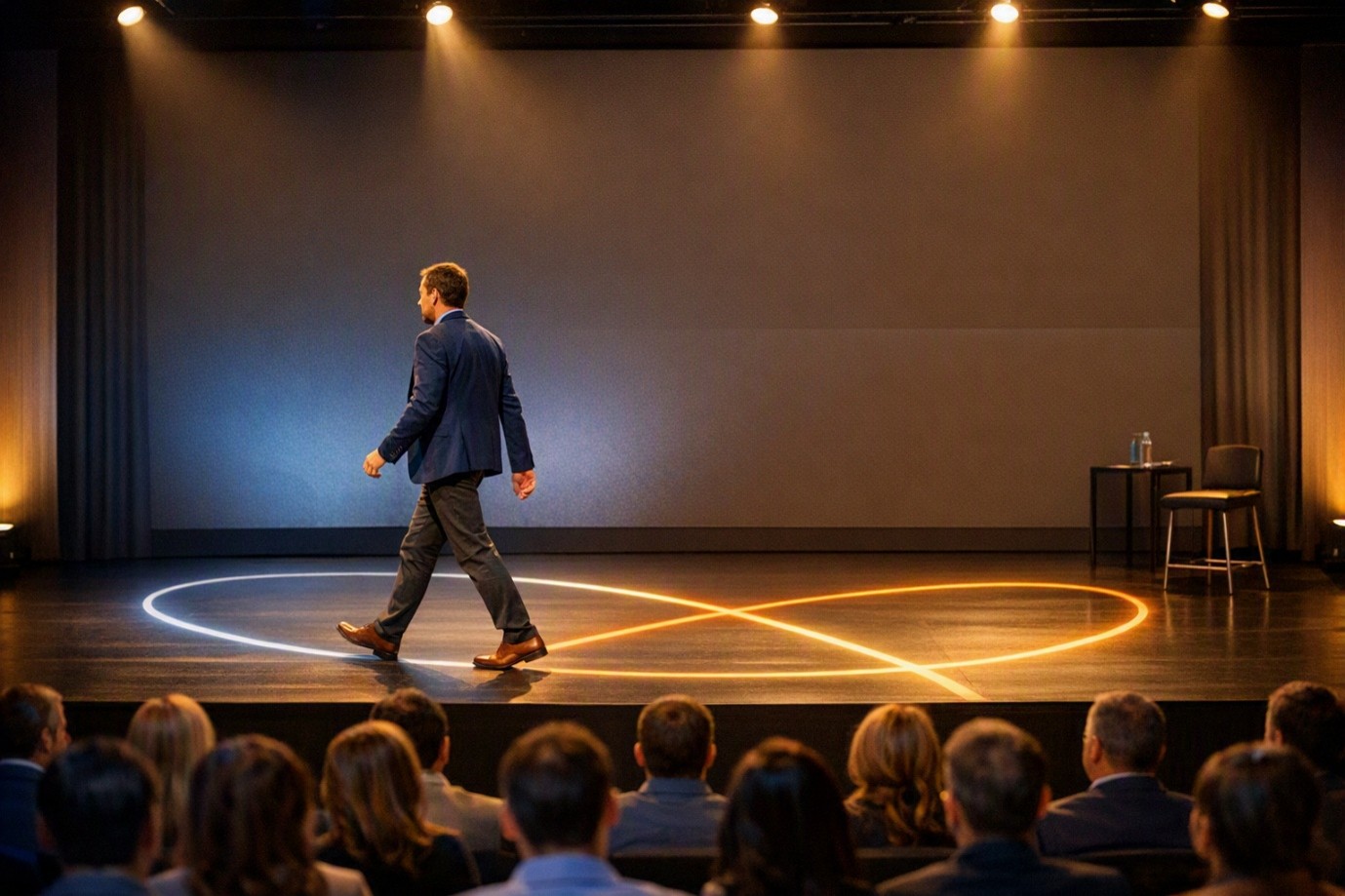
Great speakers rarely wander. Their movement looks natural, but it usually has structure behind it. They know when to stand still, when to cross the stage, when to step towards the audience and when to let a pause do the work.
Stage movement matters because audiences read the body before they fully process the words. If your feet drift, pace or retreat without purpose, people may sense uncertainty. If your movement matches your message, you create confidence, rhythm and focus.
Why Stage Movement Affects Audience Engagement
Your audience is constantly deciding where to look. Slides, gestures, facial expression, voice and movement all compete for attention. Purposeful stage movement gives the room a visual map. It tells listeners, “This matters now,” without you needing to say so.
Research and presentation coaching consistently highlight the same principle: movement should support meaning, not fill space. Speakers who move with intention appear more comfortable and credible, while restless movement can distract from even strong content.
The Anchor Point Pattern
The anchor point pattern is the simplest way to control a stage. Choose one central position for your most important ideas. Return to that place when you introduce the theme, deliver a key line, or close a section. The repeated position builds familiarity.
This pattern works especially well for keynote speakers, trainers and presenters who need authority without stiffness. The centre of the stage becomes your home base. From there, you can move out to explore examples, then return when you want the audience to refocus.
The Timeline Walk
The timeline walk uses the stage to represent the passage of time. One side can stand for the past, the centre for the present and the other side for the future. It is particularly useful for stories, case studies and change presentations.