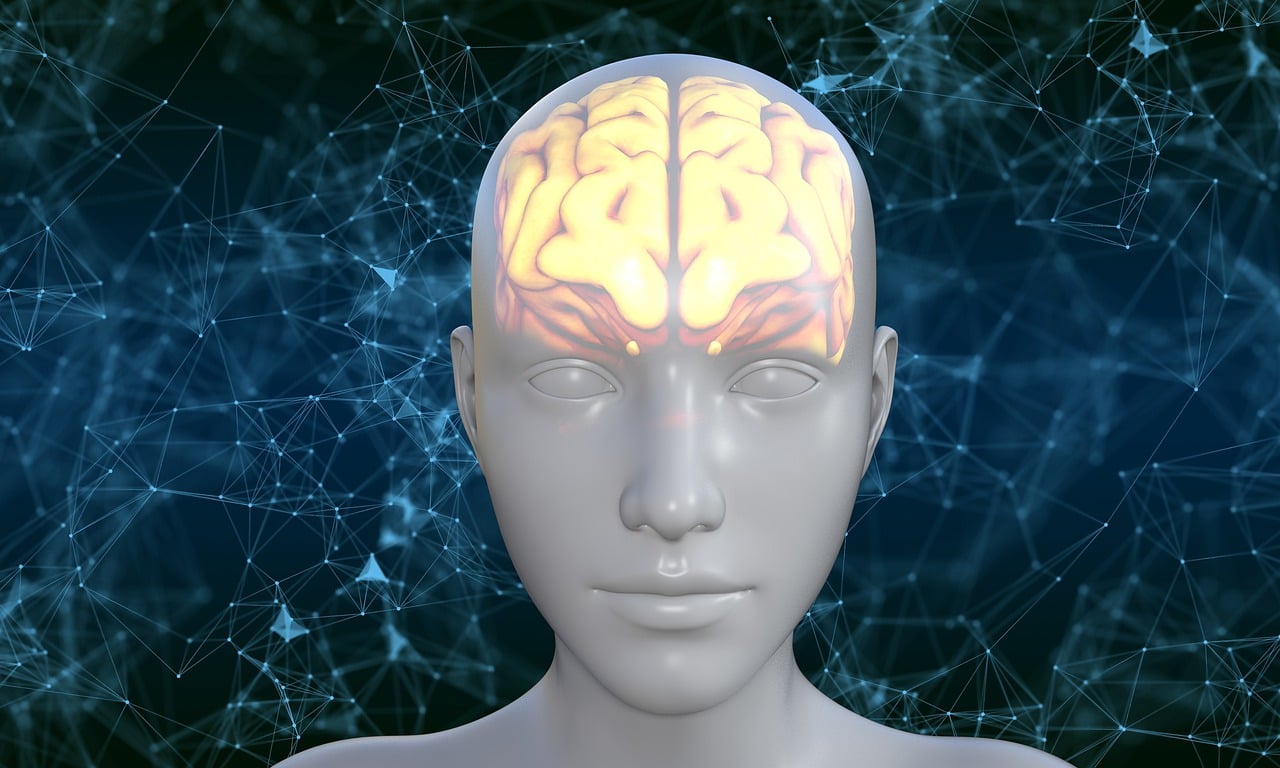
When Winston Churchill declared that Britain would “never surrender,” when Martin Luther King Jr. shared his dream, when Steve Jobs unveiled products that seemed to bend reality itself—something extraordinary happened inside the brains of their audiences. Neural pathways fired in synchrony, neurochemicals flooded synapses, and thought patterns shifted in ways that persisted long after the speakers fell silent. These weren’t merely memorable speeches; they were neurological events that literally rewired how listeners processed information and made decisions.
Understanding the neuroscience behind persuasive speaking reveals why certain communicators possess an almost magnetic quality whilst others struggle to hold attention despite having equally valuable messages. The difference lies not in mystical charisma but in their ability—whether intuitive or learned—to trigger specific neurological responses that make audiences receptive, engaged, and ultimately changed by the experience.
Neural Coupling: When Brains Synchronise
One of the most remarkable discoveries in neuroscience is neural coupling—the phenomenon where a speaker’s brain activity begins to synchronise with their listeners’ brains. Princeton researcher Uri Hasson demonstrated this through fMRI studies, showing that during effective communication, the neural patterns in a listener’s brain mirror those in the speaker’s brain, sometimes even anticipating them.
This synchronisation isn’t metaphorical; it’s literal. When a speaker describes an experience—say, walking through a forest—the sensory and motor cortices in listeners’ brains activate as if they were performing the action themselves. The speaker’s words trigger neural simulations that create vicarious experiences, making abstract concepts tangible and distant scenarios feel immediate.
Great speakers exploit this mechanism instinctively. They use vivid, sensory language that activates multiple brain regions simultaneously. Rather than saying “the company faced challenges,” they describe “the night our servers crashed, and I watched notification lights blinking red across the emergency operations room whilst engineers frantically typed, their faces illuminated by terminal glow.” This specificity doesn’t just convey information—it creates a shared neural experience that bonds speaker and audience at a neurological level.
Neural coupling explains why storytelling proves so much more persuasive than data presentation. Stories activate the brain holistically, engaging sensory cortices, motor regions, and emotional centres simultaneously. Statistics, by contrast, primarily activate language processing areas, creating a far less immersive and memorable experience.
The Dopamine-Curiosity Connection
Persuasive speakers are masters of curiosity management. They understand that curiosity isn’t merely an emotion but a neurochemical state driven largely by dopamine—the neurotransmitter associated with reward anticipation, motivation, and learning.
When speakers create what neuroscientists call an “information gap”—making audiences aware of something they don’t know but want to understand—they trigger dopamine release. This neurochemical state enhances attention, improves memory formation, and creates a pleasurable sensation that audiences associate with the speaker and their message.
Consider how effective presenters structure their openings. Rather than immediately delivering their main point, they often begin with provocative questions, surprising statistics, or seemingly contradictory information. “What if everything you’ve been told about productivity is wrong?” This opening creates an information gap that the brain desperately wants to close, flooding the system with dopamine and focusing attention.
The timing of resolution matters tremendously. Release the answer too quickly, and you squander the dopamine-driven engagement. Wait too long, and frustration replaces curiosity. Skilled speakers calibrate this timing instinctively, maintaining tension sufficiently long to deepen engagement whilst resolving uncertainties before audiences disengage.
This dopamine management extends throughout persuasive presentations. Great speakers create multiple curiosity peaks, each followed by satisfying resolutions that release dopamine, before introducing new questions that restart the cycle. This neurochemical roller coaster keeps audiences engaged far more effectively than steady, predictable information delivery.
Oxytocin: The Trust Neurochemical
Trust forms the foundation of persuasion. We’re far more likely to accept ideas from sources we trust than from those we view sceptically, regardless of the logical merits of the arguments presented. Neuroscientist Paul Zak’s research reveals that oxytocin—often called the “bonding hormone”—plays a crucial role in generating this trust response.
Oxytocin increases during emotionally resonant experiences, particularly those involving human connection, vulnerability, and narrative. When speakers share personal stories—especially ones revealing struggle, failure, or emotional challenges—they trigger oxytocin release in listeners. This neurochemical doesn’t just make audiences feel warm towards the speaker; it literally increases their willingness to cooperate, trust, and be influenced by them.
This explains why vulnerability proves so persuasive. When Brené Brown discusses her own struggles with shame and imperfection, she’s not weakening her authority—she’s strategically releasing oxytocin in her audience, creating neurochemical conditions that make them more receptive to her subsequent messages about courage and authenticity.
The oxytocin effect extends beyond personal storytelling. Eye contact, even in large auditorium settings, can trigger oxytocin release. Speakers who scan the audience, making momentary eye contact with individuals throughout the room, create multiple micro-moments of connection that collectively elevate oxytocin levels and increase receptivity.
Similarly, speakers who use inclusive language—”we” rather than “you,” “our challenge” rather than “your problem”—activate the social bonding circuits that oxytocin modulates. This linguistic choice signals that the speaker and audience belong to the same in-group, triggering the neurochemical systems that evolved to strengthen social bonds.
Mirror Neurons and Emotional Contagion
Discovered somewhat accidentally by Italian researchers studying macaque monkeys, mirror neurons fire both when we perform an action and when we observe someone else performing that action. These neurons don’t just register visual information; they create internal simulations of observed actions and emotions.
For speakers, mirror neurons represent a direct channel into audience neurology. When a speaker displays genuine enthusiasm, their facial expressions, vocal patterns, and body language trigger mirror neurons in observers, creating corresponding emotional states in the audience. This phenomenon—emotional contagion—happens automatically and unconsciously.
This neurological mechanism explains why speaker energy proves so critical. A speaker who appears bored or disengaged triggers corresponding states in their audience, regardless of content quality. Conversely, a speaker radiating genuine passion and commitment creates mirror responses that make audiences more enthusiastic about the ideas being presented.
Importantly, mirror neurons respond to authenticity. Forced enthusiasm or manufactured emotion creates dissonance that audiences perceive, often unconsciously, as “off” or inauthentic. The mirror neurons fire in response to the speaker’s genuine underlying state, not their superficial performance, which is why technique alone never replaces authentic engagement with one’s material.
Great speakers also leverage mirror neurons through strategic physical positioning and movement. Moving towards audiences during critical points creates subconscious feelings of approach and intimacy. Strategic gestures that mirror the content—expanding arms when discussing growth, contracting when discussing constraints—trigger corresponding neural simulations that reinforce the verbal message.
The Amygdala and Strategic Emotional Activation
The amygdala, our brain’s threat detection centre, plays a complex role in persuasion. This almond-shaped structure processes emotions, particularly fear, and influences how we store and retrieve emotionally charged memories.
Effective speakers understand that moderate emotional activation—including carefully calibrated concern or urgency—enhances message retention and motivates action. When the amygdala activates, it signals that information is important, worthy of attention, and should be encoded in long-term memory.
This explains why issue-focused speakers often begin with problem illustrations that activate mild concern before transitioning to solutions. Climate scientists might describe specific, concrete impacts of warming before presenting mitigation strategies. Business consultants detail competitive threats before revealing innovative responses. This pattern—concern followed by resolution—triggers amygdala activation whilst avoiding the paralysis associated with overwhelming fear.
However, excessive amygdala activation produces counterproductive results. When audiences feel too threatened or frightened, their prefrontal cortex—responsible for rational decision-making and complex thinking—becomes impaired. They shift into survival mode, where nuanced reasoning becomes impossible. Fear-mongering speakers who push emotional activation too far often find their audiences either shutting down or rejecting the message entirely as a defensive response.
The most persuasive speakers navigate this delicate balance: activating the amygdala sufficiently to signal importance and urgency, whilst providing enough hope and actionable pathways forward to prevent defensive shutdown.
Repetition, Pattern, and Neural Encoding
The brain is fundamentally a pattern-recognition system, constantly seeking regularities that allow prediction and efficiency. Persuasive speakers exploit this through strategic repetition that reinforces key messages and creates memorable structural patterns.
When information repeats, particularly across different contexts or sensory modalities, neural pathways strengthen through a process called long-term potentiation. The repeated information literally becomes easier to recall because the neural connections encoding it have been reinforced.
Martin Luther King Jr.’s “I have a dream” refrain worked neurologically as well as rhetorically. Each repetition strengthened the neural encoding of his vision, whilst the rhythmic pattern created expectations that, when satisfied, released dopamine. The combination made his message both memorable and pleasurable to process.
However, repetition must balance reinforcement with novelty. The brain habituates to unchanging stimuli, essentially tuning them out as irrelevant. Great speakers vary their repetition—saying the same thing in different ways, approaching core ideas from multiple angles, using diverse examples to illustrate consistent principles. This variation prevents habituation whilst still providing the repetition necessary for neural encoding.
The Default Mode Network and Reflection
Perhaps counterintuitively, some of the most important neural processing during persuasive presentations happens during pauses. The brain’s default mode network—active during rest and reflection—plays a crucial role in integrating new information with existing knowledge structures and generating insights.
Speakers who pack every second with information overwhelm audiences and prevent the consolidative processing necessary for genuine learning and perspective shifts. Strategic pauses—moments of silence, time for reflection, spaces between major sections—allow the default mode network to activate, processing and integrating what’s been presented.
These pauses also create contrast that makes subsequent information more impactful. After a moment of silence, the brain’s attention systems sharpen, making the next words more salient and memorable. Great speakers understand that what they don’t say, and when they choose silence, matters as much as their words.
Practical Implications for Aspiring Persuaders
Understanding the neuroscience of persuasion doesn’t mean cynically manipulating audiences. Rather, it reveals why certain communication approaches prove more effective than others and provides frameworks for crafting messages that genuinely resonate and create lasting impact.
The most persuasive speakers don’t merely inform—they create neurological experiences. They trigger neural coupling through vivid storytelling, manage dopamine through strategic curiosity gaps, build trust through oxytocin-releasing vulnerability, leverage mirror neurons through authentic emotion, activate the amygdala judiciously to signal importance, reinforce messages through varied repetition, and provide space for default mode network integration.
These aren’t tricks or manipulations; they’re alignments between message structure and brain function. When speakers craft presentations that work with, rather than against, neural architecture, they create the conditions where minds genuinely open, perspectives authentically shift, and lasting change becomes possible. The brain rewiring that great speakers achieve isn’t forced—it’s invited, welcomed, and ultimately chosen by audiences whose neurology has been primed to receive and integrate transformative ideas.